

Ask most employers what candidates want and you’ll hear “more money” before anything else. Ask the candidates themselves — which, as a recruiter, I do every single day — and money is rarely the whole story. It’s often not even top of the list.
Over the years of registering candidates across Cumbria, the North and South-West Scotland, I’ve had the same conversation hundreds of times: what would make you say yes to a job? And the answer is almost always a mix of things that cost an employer relatively little, but get overlooked constantly.
The benefits that actually move the needle
Salary gets someone through the door. These are the things that get them to stay through it:
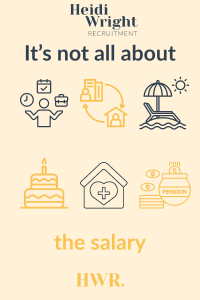
- Flexible working — not necessarily full remote, but the ability to shift hours around the school run, an appointment, or simply a better work-life balance.
- Hybrid arrangements — even two days at home a week is now viewed by many as standard, not a perk.
- Buying additional holiday — a small, low-cost benefit that candidates consistently mention as a sign an employer trusts them to manage their own workload.
- A birthday day off — it costs an employer almost nothing and candidates bring it up more often than you’d expect. It signals a company sees people as people, not just headcount.
- Private medical insurance — increasingly a deciding factor, particularly for candidates with families or anyone who’s had a recent health scare of their own or in their circle.
- Pension contributions above the minimum — less flashy, but candidates who are further into their career notice this immediately.

Priorities shift depending on who’s asking
This is the part employers most often get wrong: they design a benefits package for “the average candidate” — and there’s no such thing.
A candidate in their early twenties, a few years into their career, is usually weighing progression and learning opportunities more heavily than pension contributions. Someone with young children is going to rate flexible and hybrid working above almost everything else on this list. A candidate in their forties or fifties, further up the ladder, is far more likely to ask about private medical insurance and pension detail before they ask about holiday allowance. And someone who’s recently been through redundancy, illness, or a difficult employer will often prioritise stability and culture over any single benefit at all.
The employers who get the best response from candidates aren’t necessarily offering the most generous package — they’re offering a package that’s actually relevant to the people they’re trying to attract, and they’re talking about it clearly from the first conversation.
The takeaway for employers
If you’re struggling to attract the calibre of candidate you want, it’s worth asking whether your benefits package reflects what people at that career stage actually value — not what was put together five years ago and never revisited. Sometimes the fix costs nothing more than a birthday day off and a bit of flexibility on hybrid working.
Thinking about what your next hire will actually be weighing up? I’d be glad to talk it through.