


A 60-minute interview sounds like plenty of time. Then you’re twenty minutes in, still working through the CV. The candidate hasn’t said anything you couldn’t have learned from the page in front of you. Good interviews aren’t about fitting more in. They’re about structuring the time so you actually find out what you need to know.
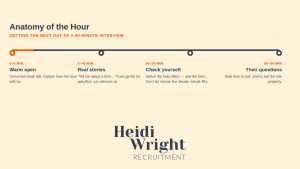
Spend the first few minutes on nothing important
It feels counter-intuitive when time is tight, but the opening minutes are worth protecting. A little genuine, unhurried small talk helps. So does a clear explanation of how the hour will run. Together, they do more for the quality of an interview than almost anything else. Nervous candidates don’t perform to their real ability. A rushed, formal opening is the fastest way to keep them nervous for the next fifty minutes.
Ask for real examples, not hypotheticals
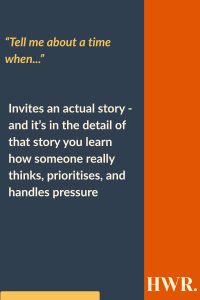
“What would you do if…” invites a rehearsed, generic answer. “Tell me about a time when…” invites an actual story. It’s in the detail of that story that you learn how someone really thinks, prioritises, and handles pressure. Push gently for specifics: what exactly did they do, what was the outcome, what would they do differently now.
Let the silences sit
When a candidate pauses to think, resist the urge to fill the gap or rephrase the question. A short silence feels much longer to the interviewer than it does to the candidate. Jumping in too early often cuts off exactly the answer you were hoping for.
Watch for the halo — and the horn
A strong opening five minutes can make an interviewer generous for the rest of the hour. The reverse is just as true — a nervous opening can make them unfairly harsh. Both are worth noticing in yourself. The candidate who settles by minute fifteen and gives excellent, considered answers afterwards is often the stronger long-term hire. That’s true even if the first impression wasn’t as polished.
Leave real time for their questions
The last ten minutes shouldn’t be an afterthought. What a candidate asks — and how much thought they’ve clearly given the role — tells you a great deal. It’s also your best chance to sell the opportunity properly. Candidates who leave with a genuine, accurate picture of the role and team are far more likely to accept. They’re also far less likely to leave within the first six months.
A good interview should feel, to the candidate, less like an interrogation and more like a proper conversation. It’s usually the ones that feel that way that get you the most honest picture of who you’re hiring.
Heidi