


Ask most employees what they think of their annual appraisal and you’ll get a shrug, or worse. Ask most managers and you’ll often hear that it feels like a form-filling exercise you squeeze in between everything else. So are appraisals actually worth doing? Yes — but not in the form most businesses currently run them.
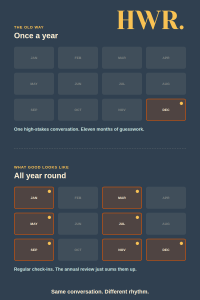
The problem isn’t appraisals. It’s the format.
A single, high-stakes conversation once a year, which often coincides with a pay decision, puts pressure on both sides to perform rather than to be honest. Managers soften feedback to avoid conflict before a pay conversation. Employees hold back concerns they’ve been sitting on for months, because raising them now feels loaded. By the time it happens, most of what they discuss is old news to both people in the room.
What links back to retention
One of the most common reasons candidates give us for leaving a job is “no visible path forward” — and appraisals, done properly, are exactly where that path should get discussed. Not as a once-a-year formality, but as a recurring, genuine conversation about where someone is heading and what’s standing in their way. When that conversation only happens annually, most of the year runs on guesswork instead.
What good looks like
The businesses that get real value from appraisals tend to treat the annual version as a summary of conversations that have already been happening — shorter, more frequent check-ins through the year, where feedback is current rather than a year old, and where commitments made actually get followed up rather than repeated at the next annual review.
So: are appraisals important? Enormously — as an ongoing process. As a single annual event, they’re mostly just an appointment in the diary that neither side particularly wants.
Heidi