


Salary transparency is no longer a nice-to-have talking point — it’s about to become a legal requirement. Ask most employers today why they leave the salary off a job advert, and the answer is rarely “we don’t believe in transparency.” It’s more often “we’d rather negotiate” or “we don’t want our own staff comparing notes.” Whatever the reasoning, that choice is about to get a lot less optional.
The debate isn’t hypothetical anymore
The UK government is currently consulting on new pay transparency rules. Employers would have to publish pay and conditions information in job adverts. Where there’s no advert, they’d have to give it in writing before interview. That consultation closes on 27 October.
It’s a genuinely significant proposal, not a minor tweak to best-practice guidance. This would apply whether or not an employer already thinks of itself as transparent about pay.
The number is already higher than most people assume
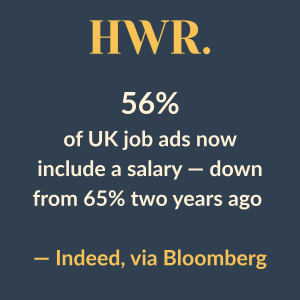
Here’s what surprised me: most UK job adverts already include a salary. Indeed’s figures put it at 56% — a majority, not a minority. So the real story isn’t that most employers hide pay and the law is finally catching them out. It’s closer to this: just over half already disclose, and that share is slipping rather than climbing. Disclosure was running at 65% back in September 2024. The trend was already moving the wrong way before any new law arrived. That makes the timing of this consultation less surprising than it first looks.

Why the number might be falling
In my experience, it’s rarely a single cause. A tighter market makes some employers want more room to negotiate before they commit to a figure. Others worry about internal pay comparisons once a number is public. That’s especially true where an employer hasn’t paid similar roles consistently. Neither is a good long-term reason to withhold the salary. Both point to fixing the underlying pay structure, not hiding it from candidates.
Where I land on this
Publishing the salary isn’t a nice-to-have anymore. Honestly, it probably shouldn’t have been optional in the first place. Candidates researching a role expect to see it. The ones who don’t see a figure increasingly assume the worst. They rarely give the employer the benefit of the doubt. I’ve had candidates pull out of a process simply because the salary wasn’t there early enough. The number itself wasn’t the problem — the vagueness read as a red flag about everything else.
That said, a legal requirement doesn’t automatically make this easy. Publishing a number means living with it. Your own team will see it, and other candidates will benchmark against it. It needs to be a figure you can defend. That’s a good discipline, not a reason to avoid it. If you can’t justify the number publicly, that’s worth knowing now — rather than finding out the hard way later.
What to do regardless of how the consultation lands
Don’t wait for the legislation to settle before getting your own house in order. Review what you’re actually paying for comparable roles. Decide on a defensible range rather than a single rigid figure. Start publishing it as standard practice now. Whatever the final rules look like, you’ll be ahead of businesses still deciding whether this applies to them. Candidates, meanwhile, will have already noticed who was transparent before they had to be.