


Cumbria doesn’t always get credit for the scale of what’s happening here economically. But the numbers are hard to ignore. For finance and accounts professionals in particular, it’s a genuinely good time to be looking around.
Nuclear and clean energy
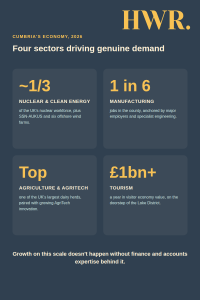
Cumbria is home to around a third of the UK’s nuclear workforce, and the pipeline of work here is significant. The SSN-AUKUS submarine programme alone is projected to create thousands of new jobs in Barrow. On top of that, Sellafield’s ongoing decommissioning programme supports close to £1.8bn a year in supply chain spending. Add six offshore wind farms supplying a meaningful share of UK capacity, and that makes this one of the most active energy clusters in the country.
Advanced manufacturing and engineering
Manufacturing provides close to one in six jobs in the county. Major employers and a strong base of specialist engineering firms make that happen. There’s also real momentum building in emerging robotics and AI applications for challenging environments, drawing on Cumbria’s nuclear expertise.
Agriculture and AgriTech
Cumbria has one of the largest dairy herds in the UK, and agriculture remains a genuine strength. AgriTech innovation increasingly adds to that too, positioning the county as more than just a traditional farming region.
Tourism and the visitor economy
With the Lake District on the doorstep, the visitor economy contributes over a billion pounds in economic value each year. It also supports a wide range of hospitality, retail, and service roles.

What this means for finance and accounts recruitment
Growth in construction, engineering, energy and manufacturing projects of this scale doesn’t happen on its own. It needs a lot of finance and accounts expertise behind it. That means project accountants, finance business partners, and supply chain or commercial finance roles. It also means FP&A support for growing SMEs across every one of these sectors. If you’re a finance professional, you might be wondering whether there’s genuine opportunity in Cumbria beyond the obvious names. The honest answer right now is yes.
These figures come from published regional economic strategy and labour market data. Worth a look yourselves if you want the full picture — and always worth double-checking before quoting externally.
Heidi