


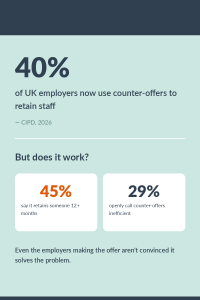
Hand in your notice in finance or accounts right now, and a counter-offer probably isn’t far behind. There’s a good chance your employer will offer you more money to stay. Counter-offers have become far more common…
Why the offer arrives so quickly
The same research found employers aren’t shy about the numbers involved. 38% match the external offer outright, and 40% go higher still. It sounds flattering. It’s also revealing. If that raise was always affordable, why did it take a resignation letter to unlock it?
What a counter-offer doesn’t fix
Pay is rarely the only reason someone starts looking. In my experience, it’s usually one item on a longer list: management, progression, recognition, flexibility. A bigger number on the payslip just papers over the rest. It doesn’t solve any of it. Even the employers using counter-offers aren’t fully convinced they work long-term. CIPD’s own data shows only 45% think a counter-offer keeps someone for a year or more. Meanwhile, 29% openly say counter-offers are inefficient at retention. That’s a genuine split of opinion from the people making the offers.
The questions worth asking before you accept
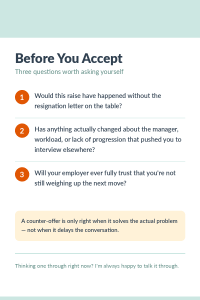
If an employer hands you a counter-offer, be honest with yourself first. What actually made you start looking in the first place? Would this raise have happened without your resignation letter on the table? Has anything changed about the manager, the workload, or the lack of progression that pushed you to interview elsewhere? And if you accept and stay, will your employer ever fully trust you’re not still weighing up the next move?
A counter-offer can be the right call occasionally. But only when it solves the actual problem, not when it delays a conversation you were already having with yourself.
Heidi